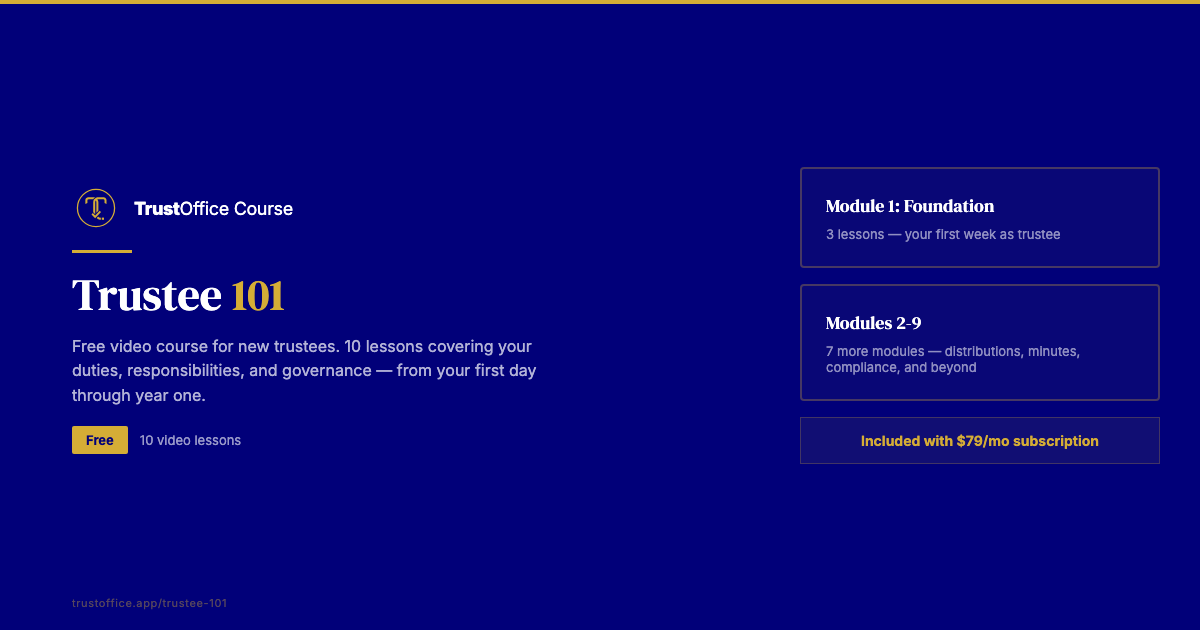
Enroll in a Complimentary Trustee Course to Improve Your Skills Today
Taking a free trustee course can substantially enhance one's professional abilities. It presents important knowledge regarding fiduciary responsibilities and financial oversight. Learners can progress at their own tempo while interacting with field professionals. This prospect not only deepens comprehension but also unlocks opportunities for career progress. However, many may ponder what concrete skills they can expect to develop and how these can be applied in everyday business situations.

Core Proficiencies You'll Build From a Free Trustee Course
A complimentary trustee program furnishes participants with essential skills crucial for effective governance and oversight. The course content typically covers key topics such as financial education, enabling trustees to understand budgets, financial statements, and investment strategies. Participants also develop expertise into regulatory obligations, guaranteeing compliance with regulations and moral principles.
Moreover, the educational program improves strategic direction abilities, furnishing individuals to advance future organizational objectives. Effective communication talents are another key significant aspect, allowing board officials to convey viewpoints plainly and liaise with stakeholders effectively.
Furthermore, teamwork and leadership skills are stressed, encouraging teamwork among board members and promoting a productive deliberation process. Dispute management techniques are also taught, equipping participants to navigate disagreements with professionalism.
Fundamentally, these competencies not only equip individuals for their roles as trustees but also develop their overall management expertise, making them key players to any organization.
Primary Advantages to Register for a Free Trustee Training for Career Development
A large number of professionals seek out ways to enhance their vocational paths, and taking a gratis trustee course offers unique strengths that can markedly enhance one's trajectory. To begin with, these classes furnish core expertise about fiduciary responsibilities, enhancing a professional's credibility in their field. Acquiring the ethical and legal obligations of a trustee can open up new career opportunities and responsibilities.
Furthermore, connecting with industry professionals and colleagues during these courses can produce valuable relationships that may support career advancement. Participants also develop practical abilities in accounting and oversight, which are in great demand in various industries. Finally, the flexibility of online formats allows individuals to study at their own speed, making it easier to manage education with existing work commitments. Overall, enrolling in a free trustee course not only enriches knowledge but can also greatly enhance professional opportunities and career growth.
Discovering the Perfect Free Trustee Class for You
How might one pinpoint the most fitting complimentary trustee program from the large selection on offer? First, people need to copyrightine their particular requirements and professional aspirations, identifying what expertise or understanding shortfalls they aim to resolve. Next, researching course content and structure is essential; a structured course description can demonstrate whether the course will satisfy individual requirements.
Furthermore, assessing the qualifications of the teachers can offer understanding into the standard of instruction offered. Feedback and reviews from past participants are priceless, as they reflect actual results and experiences.
Finally, evaluating the flexibility of the course layout—whether it is self-directed or scheduled—can aid in choosing a program that fits one's way of living. By considering these factors, individuals can reach a more informed decision, making sure the selected program aligns with their professional practical resource aspirations and study preferences.
Proven Advice for Gaining Maximum Value from Your Trustee Course
Achieving the greatest benefits of a trustee course calls for a careful approach. Participants need to begin by setting clear goals and identifying the specific skills or knowledge they aim to acquire. Active participation in the learning experience is necessary; this includes joining discussions, posing questions, and working with peers. Regular review of the course materials aids in reinforcing understanding and retention of key concepts.
Moreover, it is helpful to document information and compile outlines of important topics, enabling simpler revision later. Connecting with peer attendees can offer valuable insights and support, cultivating a sense of community. Leveraging additional materials, such as suggested texts or online forums, can improve understanding and implementation of learned skills.
Ultimately, putting knowledge into practice in applied situations, whether through simulations or hands-on experience, strengthens learning and boosts self-confidence in trustee responsibilities. By pursuing these strategies, individuals can maximize their trustee course program for both personal and professional development.
Everyday Applications of Fiduciary Competencies in Organizational Leadership
Trustee abilities are vital in effective governance, enabling individuals to traverse intricate institutional environments. These competencies are essential for promoting openness, responsibility, and principled choices within various entities, including nonprofits, educational institutions, and corporate boards. Trustees outfitted with robust analytical capabilities can assess organizational results, financial health, and adherence to regulatory standards, thereby enhancing overall governance.
Moreover, effective communication competencies allow trustees to engage with stakeholders, guaranteeing that multiple viewpoints are taken into account in decision-making processes. Conflict resolution skills are just as vital, since they support copyright harmony and collaboration among board members and other stakeholders. Additionally, forward-thinking planning competencies enable trustees to coordinate organizational goals with broader missions, ensuring endurance and growth. In this way, the application of trustee skills in governance strengthens institutional frameworks but also promotes trust and integrity within communities and organizations.
Commonly Asked Inquiries
Do Industry Organizations Acknowledge Free Fiduciary Training?
Complimentary trustee training may not consistently be recognized by industry associations. Approval typically is based on the educational provider and the specific accrediting body, so participants should check certifications before registering for any offering.
How Long Will a Typical Free Trustee Course Require to Conclude?
A typical free trustee course generally takes between four to eight weeks to complete. Course duration may differ depending on the provider, material depth, and participant engagement, permitting for adaptability in learning schedules.
Is it Possible to Acquire a Document Upon Completing a Free Trustee Course?
Yes, attendees can generally get a diploma after finishing a free fiduciary program. However, certification availability may vary by organization, so individuals should confirm the specific details with the course organization before registering.
Are there Caps to How Much Trustee Courses I'm Able to Enroll In?
Generally, there is no cap on the amount of trustee courses individuals may take. Learners are motivated to pursue multiple courses to broaden their understanding regarding trustee responsibilities and governance.
What Prerequisites Are Required to Participate in a Free Trustee Course?
To copyright for a free trustee course, students typically need a essential knowledge of finance principles, commitment to the course duration, and sometimes background experience in fiduciary roles. Specific requirements may diverge by institution.